When people think of an LTTA — a Learning, Teaching, and Training Activity — they picture five days of sessions, group games, and shared meals. But the real work starts weeks earlier, in dozens of small steps that transform a training into a shared experience.
For ConnectiON Vibes, the LTTA in Cavaion Veronese is a key milestone. It brings together 12 youth workers from Italy, Romania, and Cyprus to learn how to use the tools created within the project: the ConnectiON Vibes Card Game, the Facilitation Manual, and the accompanying methodology. The purpose is clear: to prepare youth workers to create safe, inclusive spaces where young people can open up, express themselves, and connect beyond surface-level talk.
We prepared an article to tell you pretty much everything you need to know about how to prepare an LTTA with all the right ingredients for meaningful connection.
Choosing the right participants
Before any plane tickets were booked, each partner organization had an essential task: selecting the participants.
They needed people who could not only learn, but later apply what they experienced in their communities; youth workers ready to hold emotional space for others. That meant looking beyond formal CVs and checking for the qualities that make facilitation work: empathy, curiosity, presence, and an interest in inclusion.
Each partner had to balance representation (gender, geography, experience) while ensuring that everyone shared a willingness to learn by doing.
It’s one of the hardest and most underestimated parts of organizing a training: the group you choose defines the atmosphere from the first day.
Finding the right space
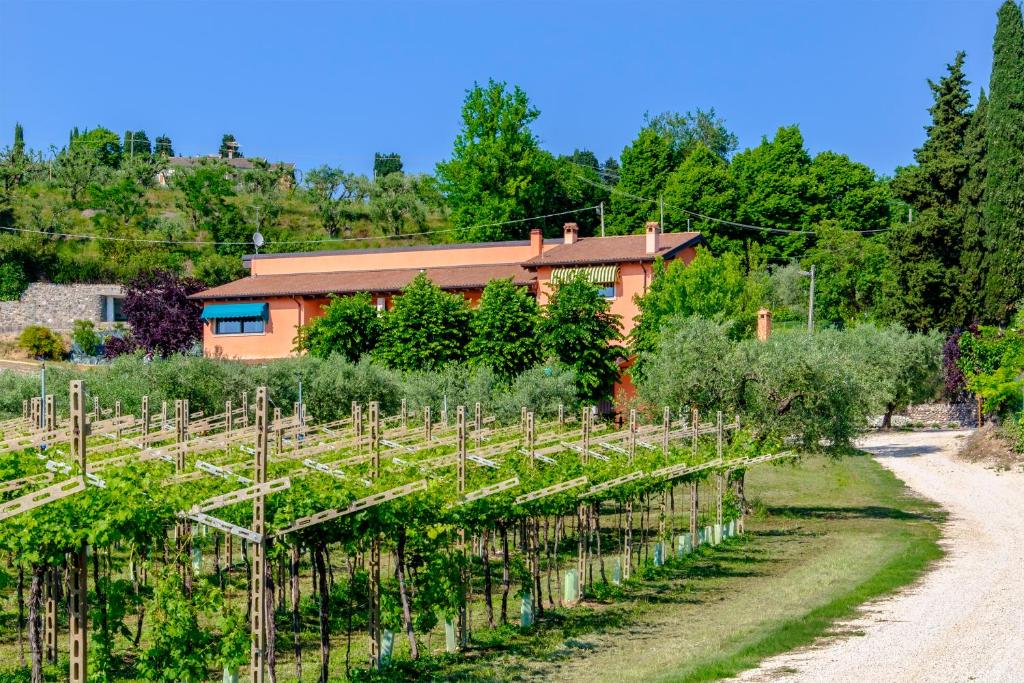
Youmore APS, the Italian partner, took charge of logistics and hosting. They researched possible venues before settling on Agriturismo Al Colle, a peaceful guesthouse surrounded by vineyards in Cavaion Veronese.
The location offers everything a training like this needs: quiet surroundings, open-air spaces, and a sense of retreat from daily noise.
The charm of the place, however, also meant a few practical challenges. The number of rooms was limited, so arranging accommodations required patience and negotiation. Room allocations had to respect personal boundaries, cultural habits, and gender balance, all while making sure everyone felt at ease. After several iterations, the puzzle finally fit.
The unseen work
A successful LTTA depends as much on logistics as on inspiration. In the weeks before the event, the project team with Youmore leading the way, handled what most people never see: infopacks, learning agreements, GDPR forms, travel insurance, attendance sheets, participation certificates, and travel coordination.
The hosting team gathered detailed information about participants’ dietary needs, accessibility requirements, and personal preferences, details that seem small but make a big difference in how welcome someone feels when they arrive.
They also worked closely with the trainers to co-create the learning agenda. Every session was discussed, reviewed, and balanced to match the rhythm of the group. It’s not only about fitting activities into a schedule, but about crafting a flow that allows energy to rise, rest, and deepen naturally.
Food as culture and care
Meals often tell the story of a project better than its reports. For this Training Course experience, the organizers wanted food to become part of the connection process. Instead of standard catering, they brought in a local cook — a traditional Italian nonna — to prepare meals with warmth and authenticity.
Her kitchen became the quiet heart of the project. For each day of the experience, she worked with the organizers to plan meals that could accommodate all participants: vegetarian, sugar-free, lactose-free, savory breakfasts (very uncommon for Italians), and more. Bringing people of different cultures and habits together turns shopping for ingredients into a lesson in inclusion, learning how to feed a diverse group with care, not compromise.
Every meal became a small cultural exchange, a reminder that connection starts from something as simple as sharing a table.
Co-designing the learning journey
In the days leading up to the LTTA, Youmore’s team made sure that the venue had everything it needed for a successful Training Course.
And while they managed the logistics, the 2 trainers from Romania and Cyprus focused on the educational flow. Together, they designed a five-day process that would train participants to both play the ConnectiON Vibes game and facilitate it with sensitivity.
The agenda balances practice, reflection, and embodied learning: how to read group energy, how to handle silence, how to listen actively, ask the right questions, and how to make vulnerability safe rather than forced.
Behind every activity lies a question: What do participants need in order to feel safe enough to be themselves?
When everything comes together
By the time participants arrive, the hard work has already disappeared into the background. Rooms are ready, the materials are sorted, and the smell of homemade food fills the air.
What looks effortless is, in fact, the result of weeks of careful coordination, creative problem-solving, and constant communication between partners.
As the group gathers for the opening circle, you can see why all this preparation matters. The first conversations are hesitant, but soon laughter replaces silence. Within a few hours, the space feels alive: open, curious, human.
That is what organizing an LTTA truly means: creating the conditions for learning and connection to unfold naturally.
Behind every workshop, every meal, and every reflection lies the same invisible effort: thoughtful preparation that turns a schedule into an experience and a project into a community.